
Hookah vs Vape: Which One Is Actually Right for You?
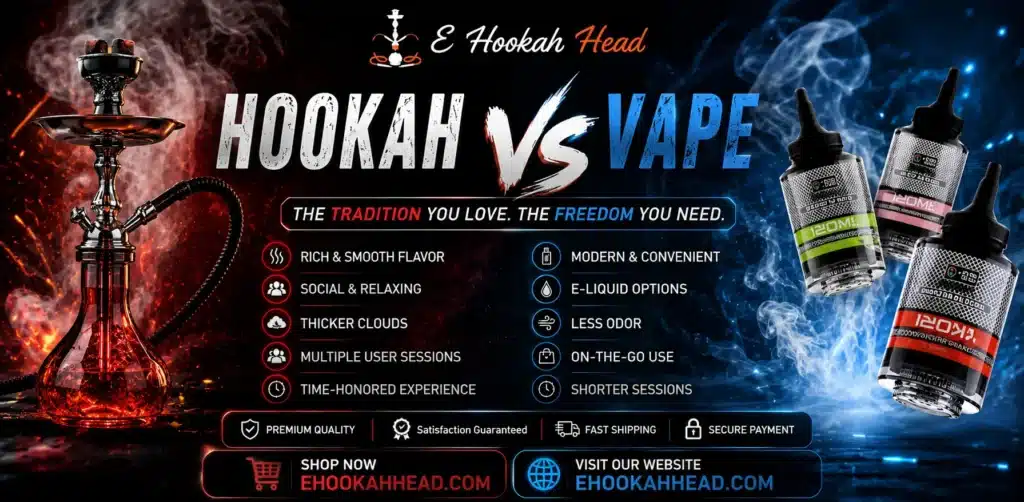
Hookah (shisha) is a water-pipe device that burns flavored tobacco through charcoal, producing large clouds through a water-filtered hose, and is typically used socially in sessions lasting 30–60+ minutes. A vape (e-cigarette or disposable vape) is a battery-powered device that heats e-liquid into an aerosol, designed for quick, individual, on-the-go use. Neither is risk-free – both deliver nicotine and combustion or heating byproducts – but they differ significantly in usage pattern, chemical exposure, cost, portability, and social context. Your choice ultimately depends on what you’re looking for: a communal, ritual experience (hookah) or a discreet, flexible option with more flavor and nicotine-strength control (vape).
What is Hookah?
A hookah (also called shisha, narghile, or waterpipe) is a smoking device that dates back centuries, originating in the Middle East and South Asia before spreading globally. It consists of a base filled with water, a body/stem, a bowl that holds flavored tobacco (shisha tobacco, usually a molasses-tobacco blend called mu’assel), a windscreen, charcoal placed on top to heat the tobacco, and a hose or multiple hoses through which smoke is inhaled after passing through the water.
Hookah tobacco is almost always flavored – common categories include fruit blends (apple, grape, watermelon), dessert flavors (vanilla, chocolate mint), and traditional blends (double apple). Sessions are typically shared among a group, often at a lounge, cafe, or at home, and can last anywhere from 20 minutes to over an hour.
What is Vape?
A vape (electronic cigarette, e-cig, mod, pod system, or disposable vape) is a battery-operated device that heats an e-liquid (a mixture of propylene glycol, vegetable glycerin, flavoring, and typically nicotine) using a coil, converting it into an inhalable aerosol – commonly called vapor. There is no combustion and no charcoal involved.
Vapes come in several formats:
- Disposable vapes – single-use, pre-filled, pre-charged (e.g., 5,000–50,000 puff devices)
- Pod systems – refillable or replaceable pods with e-liquid
- Mods/tanks – customizable devices for advanced users, often used with freebase or nicotine salt e-liquids
Vapes are generally designed for individual, repeated, short-duration use throughout the day rather than one long shared session.
Hookah vs Vape: Core Differences at a Glance
| Factor | Hookah | Vape |
| Heating Method | Charcoal-heated tobacco (combustion/pyrolysis involved) | Battery-heated e-liquid (no combustion) |
| Session Length | 30–60+ minutes, typically shared | Seconds to minutes, individual puffs throughout the day |
| Nicotine Delivery | Present in shisha tobacco, but diluted by molasses and water-filtered smoke | Concentrated in e-liquid; strength is user-selectable |
| Portability | Not portable; requires setup, charcoal, and space | Highly portable, pocket-sized |
| Social Context | Traditionally communal/social | Primarily individual, though shared use happens |
| Byproducts | Carbon monoxide from charcoal, tar-like residue, combustion toxins | Aerosol containing PG/VG, flavorings, nicotine, some metals from coil |
| Cost Per Session | Charcoal, tobacco, lounge fees add up | Devices/pods are cheaper per use over time for regular users |
| Flavor Variety | Wide but tobacco-based flavor range | Extremely wide, non-tobacco-based flavor range |
| Regulation | Often taxed/regulated as tobacco product; lounge-specific rules | Regulated separately as vapor/e-cigarette products, varies by state/country |
Health Considerations: What Does the Evidence Say?
This is the area readers care about most, so let’s be direct and evidence-based rather than making sweeping claims either way.
Hookah Health Factors
- A single hookah session can involve inhaling far more smoke volume than a cigarette, simply because of session length and puff volume.
- Charcoal combustion produces carbon monoxide, which is a documented risk factor in hookah use – several public health studies have flagged elevated CO exposure during hookah sessions.
- The water filtration does not eliminate nicotine, tar, or heavy metals — it’s a common misconception that water “cleans” the smoke.
- Sharing a hose introduces additional hygiene/infection considerations in social settings.
Vape Health Factors
- Vaping avoids combustion, so it does not produce carbon monoxide or tar in the way hookah or cigarettes do.
- However, vape aerosol isn’t inert – it contains nicotine (in most products), ultrafine particles, and trace metals that can leach from heating coils.
- Long-term health data on vaping is still developing since these products are relatively newer than combustible tobacco, and researchers continue to study effects on lung function and cardiovascular health.
- Nicotine salt-based disposable vapes can deliver nicotine efficiently, which may increase dependency risk, especially at high concentrations.
Bottom line: Both hookah and vaping carry health risks and neither should be considered “safe.” If you don’t currently use nicotine products, health authorities generally advise against starting either.
Nicotine Content and Addiction Potential
Nicotine dependency risk differs based on delivery method and concentration, not just the product category.
- Hookah: Shisha tobacco typically contains less concentrated nicotine per gram compared to cigarette tobacco, but because sessions last much longer and involve significantly more puffs, total nicotine exposure per session can be substantial — sometimes comparable to or exceeding a pack of cigarettes, depending on session length and inhalation depth.
- Vape: Nicotine concentration is often clearly labeled (e.g., 20mg, 50mg nicotine salts), giving users more visibility and control over intake. However, high-concentration disposables can deliver nicotine quickly and efficiently, which may make regulating intake harder for some users.
Neither product should be assumed “nicotine-free” or “low-nicotine” without checking actual labeling, and flavored options in both categories are equally capable of containing nicotine.
Cost Comparison
Hookah costs typically include:
- Hookah unit (one-time, $20–$150+ depending on quality)
- Shisha tobacco packs (recurring)
- Charcoal (recurring, natural coconut charcoal preferred over quick-light for fewer chemical additives)
- Lounge/cafe pricing if not smoking at home (session fees, often $15–$40 per session at a hookah lounge)
Vape costs typically include:
- Disposable vape devices (one-time per device, replaced every few days to weeks depending on puff count)
- Or a reusable device plus recurring pod/e-liquid purchases
For frequent users, vaping is often more cost-effective per week since there’s no charcoal, lounge fee, or shared-session overhead — but heavy hookah lounge-goers may spend similarly to heavy vape users depending on frequency.
Flavor Experience
Both categories are known for flavor variety, but the experience differs:
- Hookah flavors are tobacco-based and blended with molasses, giving a smoother, thicker smoke with flavors like double apple, mint, grape, and watermelon. The flavor profile tends to be more traditional and often associated with a specific ritual or lounge atmosphere.
- Vape flavors span an enormous range – fruit, dessert, menthol, beverage-inspired, and candy-like profiles – since e-liquid formulation allows far more flexibility than tobacco-based blends. Flavor perception in vaping also tends to be sharper and more immediate due to the aerosol delivery method.
If you’re researching a specific vape flavor selection, checking a dedicated hookah and vape resource site like eHookahHead can help compare current flavor catalogs.
Social and Cultural Context
Hookah has deep cultural roots, particularly in Middle Eastern, South Asian, and Mediterranean traditions, where it’s tied to hospitality, gatherings, and social bonding – smoking is often secondary to the shared experience itself. Hookah lounges are designed around this communal ritual.
Vaping, by contrast, emerged as a more individualized, often utilitarian alternative – frequently marketed toward smokers looking for a substitute, or as a personal, discreet habit that fits into daily routines rather than dedicated social sessions.
Legal Status and Regulations
Regulations for both products vary significantly by country, state, and even city:
- Many regions regulate hookah tobacco similarly to other tobacco products, including age restrictions (21+ in the US under federal law), indoor smoking bans that may or may not exempt hookah lounges, and taxation.
- Vape products face their own regulatory framework – including flavor bans in some states, PMTA (Premarket Tobacco Product Application) requirements in the US, and age restrictions matching tobacco (21+).
Always check your local and state-level regulations, since rules for both categories are actively evolving.
Which One Should You Choose?
- Choose hookah if you value a social, ritual-based experience, don’t mind longer sessions, and are comfortable with charcoal-based setup or visiting a lounge.
- Choose vape if you want portability, discretion, quick use, and more control over nicotine strength and flavor variety on the go.
- Choose neither if you’re nicotine-free and want to stay that way — both products carry real health risks, and starting either introduces new exposure you didn’t have before.
FAQs
Is hookah less harmful than vaping?
No, hookah is not proven to be less harmful. In fact, longer session times and charcoal combustion mean hookah can expose users to more total smoke volume and carbon monoxide compared to a typical vaping session.
Does vaping contain nicotine like hookah?
Yes, most vape products and most shisha tobacco both contain nicotine, though concentration and delivery speed differ. Nicotine-free options exist in both categories but are less common.
Which is more addictive, hookah or vape?
Addiction potential depends on nicotine concentration and frequency of use rather than the product category alone. High-nicotine disposable vapes can create fast dependency, while frequent, long hookah sessions can also lead to significant nicotine exposure over time.
Is hookah smoke filtered by water, making it safer?
No — this is a common myth. Water filtration cools the smoke and may remove some larger particles, but it does not remove nicotine, tar, or carbon monoxide in any meaningful way.
Can you vape hookah flavors?
Many vape e-liquid brands offer flavors inspired by traditional shisha profiles (like double apple or mint), but the delivery mechanism and chemical composition remain entirely different from actual hookah tobacco.
Is hookah legal everywhere vaping is legal?
Not necessarily. Regulations differ by product category and jurisdiction — some regions restrict flavored vapes but allow flavored shisha, or vice versa. Always verify local laws.
How long does a vape session last compared to hookah?
A vape session (a few puffs) takes seconds to a couple of minutes, while a hookah session is typically a shared, seated experience lasting 30–60+ minutes or longer.
Are there nicotine-free hookah or vape options?
Yes, both herbal shisha (nicotine-free tobacco alternatives) and zero-nicotine e-liquids exist, though they represent a smaller share of the market compared to nicotine-containing versions.